Highbeam epidemic
2026-03-28
2026-03-28
I recently moved back to Bengaluru and have been adjusting to the mind-numbing, energy-draining traffic conditions. One way to work around the traffic is to get to office early and back home early. The roads are pleasant. And if you have to travel across the city with no particular time constraints, do it in the night after peak hours. You get to enjoy the city's night-lights on empty roads. However, driving at night involves overcoming a different challenge altogether - being dazzled.
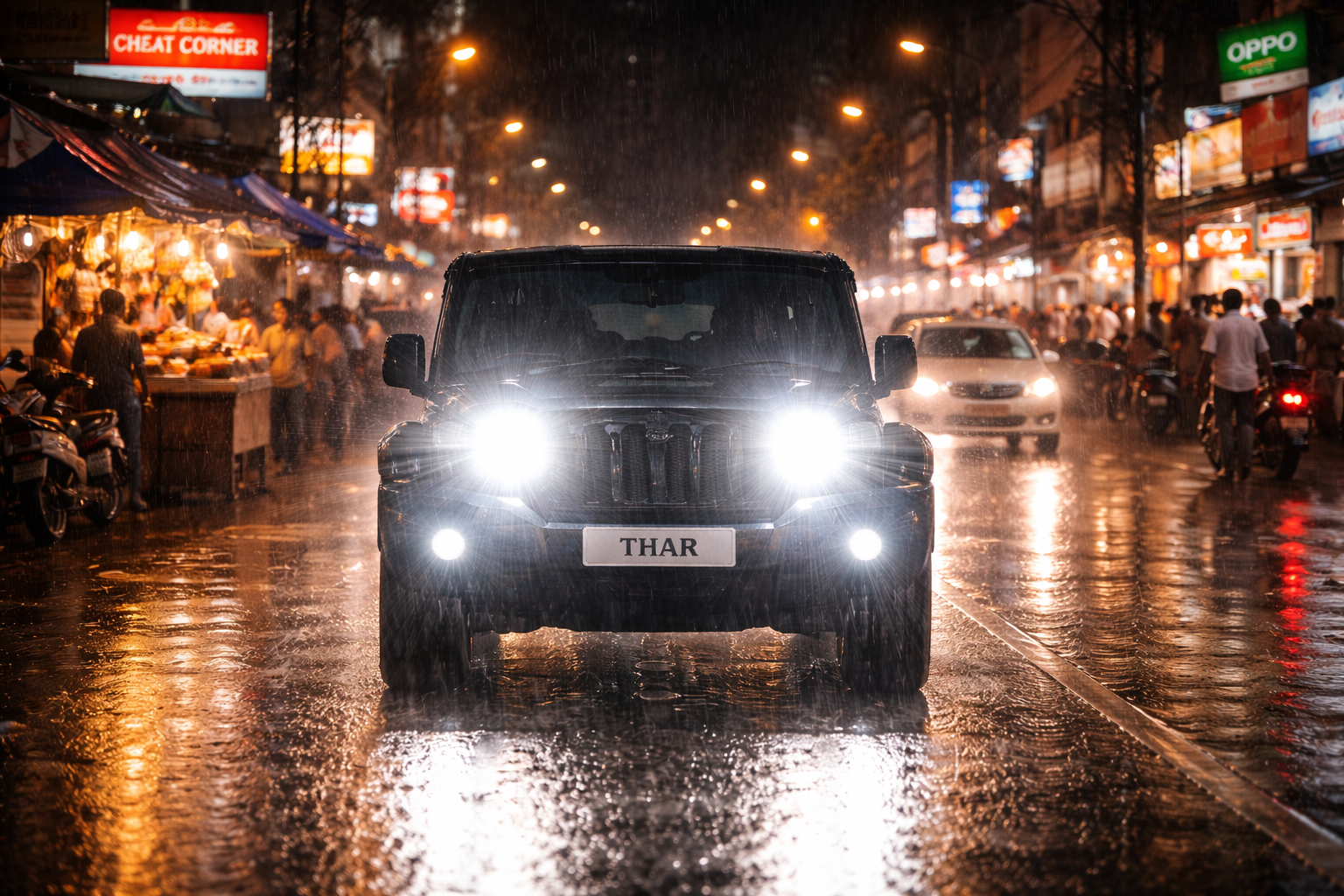
Cars in the city have transitioned from traditional halogen headlamps to brighter LED ones. Whether intentionally or out of ignorance, drivers increasingly use high beams within city limits including in well-lit roads. Most drivers are taught a simple rule: use low beams in city conditions, and flash only when necessary to signal or overtake.
Police enforces violators with fines that say "Improper use of headlights / Dazzling or Dangerous Driving." Two rules govern the usage of car headlamps. Rule 106 of Central Motor Vehicle Rules, 1989 which governs the use of headlamps and their specifications and Section 184 of Motor Vehicles Act, 1988 which dictates the rules for dangerous driving that could cause harm to others on the road. However, enforcement is inconsistent, only done in specific drives. (the last one)
Since road usage is a shared public good, other drivers respond in kind. What starts as a few offenders quickly becomes the norm. My car mechanic tells me that more powerful LED-based headlamps are in increasing demand. Where does this end?
One possible solution is that the regulation should enforce car manufacturers to fit Adaptive Driving Beams (ADB) by default. The system adjusts the intensity of lights automatically based on surroundings and is widely adopted in many developed markets. Also, it shifts the burden from enforcement (which is costly and ineffective) to design and solves the problem at the source.